 AU
AU
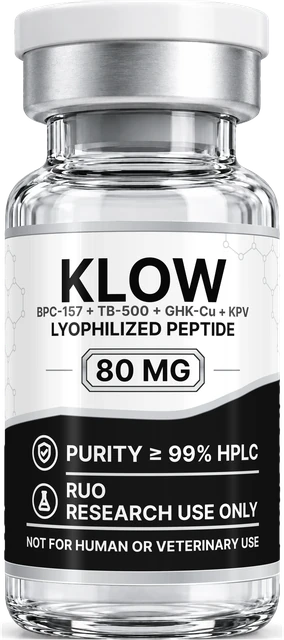
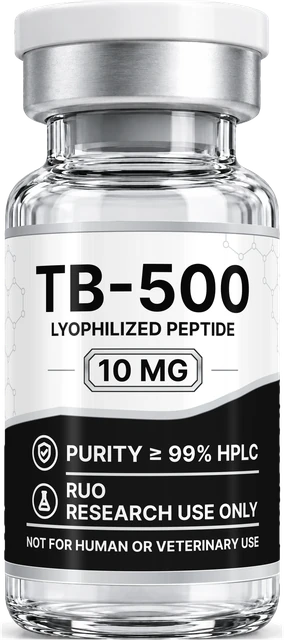
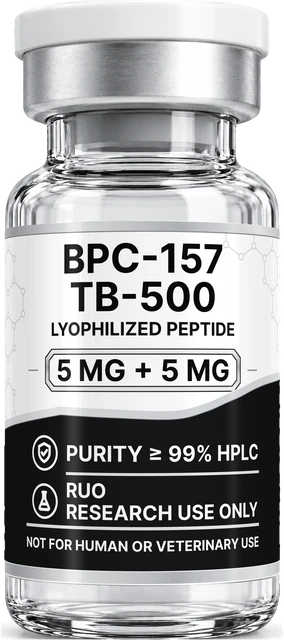
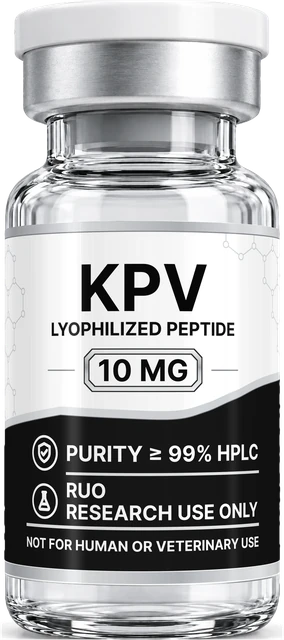
KLOW is a mixture of peptides designed specifically for use in laboratory studies where cellular signaling, tissue remodeling, inflammation, extracellular matrix and peptides are under study. KLOW 80mg peptide mixture consists of four research peptides, namely, GHK-Cu 50mg, BPC-157 10mg, TB-500 10mg and KPV 10mg.
Whereas research based on a single peptide does not allow one to study more than one biological pathway at once, peptide research using KLOW peptides enables scientists to conduct such experiments. All the peptides have been used individually for studies related to collagen synthesis, fibroblast function, cell migration, angiogenesis, actin signaling and inflammatory signaling.
KLOW 80mg peptide mixture is provided as lyophilised research substance and should be used in laboratory, analytical and scientific investigations only.
What Is KLOW?
KLOW is a four-component research peptide blend containing:
- GHK-Cu – 50mg
- BPC-157 – 10mg
- TB-500 – 10mg
- KPV – 10mg
- Total material content – 80mg
The 50:10:10:10 composition is commonly associated with KLOW 80mg formulations.
The background of research in each compound is unique. The GHK-Cu compound is a copper-bound tripeptide that has been studied concerning extracellular matrix regulation, collagen, and gene expression. The BPC-157 compound is a 15-amino acid synthetic peptide that has been researched in pre-clinical tissue and gastrointestinal models. Research on TB-500 compound concerns the thymosin beta-4 associated pathways, especially actin dynamics and cell migration. The KPV compound is a short tripeptide associated with alpha-MSH and researched in experimental inflammatory signaling models.
Combining these compounds forms a research material that allows investigating interactions between distinct molecular and cellular pathways.
Why Is KLOW Being Studied?
Scientific attention to KLOW peptides can largely be related to experiments that cover multiple pathways. Biological processes like tissue remodeling and inflammation use complicated networks as opposed to a single signalling pathway.
Possible experimental fields where researchers can conduct experiments on KLOW peptides include:
- cell migration and proliferation;
- extracellular matrix organization;
- research on collagen;
- studies on fibroblasts;
- angiogenesis;
- actin cytoskeleton regulation;
- cytokine and inflammatory signaling;
- oxidative stress models;
- tissue remodeling;
- peptide interactions and stability.
The presence of KPV makes the KLOW different from other three-peptides with such components as GHK-Cu, BPC-157 and TB-500. Additional components give an opportunity to study inflammatory signaling along with cell migration and extracellular matrix.
However, data obtained from research on individual peptides cannot be automatically applied to the mixture of KLOW peptides. Specific research on combination is needed.
How Does KLOW Work?
There is no single known mechanism of action for the KLOW blend. Instead, the study focuses on the biological mechanisms underlying the individual components and possible interaction.
GHK-Cu
GHK-Cu is a natural copper-binding peptide. In experimental research, its association with copper transport, collagen formation, fibroblasts’ behavior, matrix remodeling and gene expression has been studied.
BPC-157
BPC-157 preclinical research focuses on its possible relationship with angiogenesis signaling, nitric oxide pathway, cell migration and tissue response mechanism.
TB-500
The TB-500 research relates to thymosin beta-4 biology. In this field, experiments focus on actin regulation, cell motility, cytoskeleton organization and cell migration.
KPV
KPV or Lys-Pro-Val is a short peptide fragment found in alpha-MSH. Experiments related to this molecule include its interaction with inflammatory pathway, including the NF-κB pathway and cytokine responses.
It should be noted that the scientific interest in KLOW is related to the study of these mechanisms in combination under experimental conditions, not because there is evidence for its therapeutic effect.
Understanding KLOW Dosage
When talking about the KLOW dosage, it is necessary to separate two terms: the concentration used in the lab experiment and the dose in humans.
KLOW is an experimental mixture, and it does not have any universal standardized dose for humans. The protocol of research can vary depending on the experimental model, the purpose of the experiment, the structure of the assay, the range and properties of the biological system that is under investigation.
It is necessary to calculate the concentration based on the amount of total material and its ratios for laboratory experiments. Since the KLOW mixture has four components in a certain formulation, it is important to take into account the concentration of both total mixture and individual components.
KLOW and Research Quality
The importance of quality assessment is of paramount concern regarding a peptide cocktail composed of multiple components. Just having an 80mg claim is not sufficient enough to determine its identity and analytical quality.
Some of the important issues that researchers need to take into account when assessing KLOW peptide quality include the following:
- Identifying the batch/lot number of the product;
- The actual formulation and quantity of components;
- Certificate of Analysis;
- Analytical methods used for the analysis;
- The chromatogram (when applicable);
- The method used for determining the molecular identity;
- Storage/handling conditions; and
- Traceability from the vial to the documentation.
It is vital that when dealing with multi-peptide products, researchers must have documentation that corresponds to the specific batch used and not just on the general specification sheet.
KLOW in Australia
There has been rising interest in research peptides in Australia in connection with overall scientific studies related to peptide chemistry, metabolic signaling, cell biology, and research regenerative models.
In studying KLOW 80mg in Australia, the Australian researcher needs to look at the product in terms of scientific and regulatory aspects. Research peptides must be dealt with within relevant institutional, laboratory, and Australian legal guidelines.
When conducting research on KLOW peptide in Australia, scientific buyers need to consider issues such as product identity, product specification, batch tracing, analysis, and proper storage conditions.
It is important for the product description to clearly demarcate between research and clinical evidence. KLOW is still a research blend that requires scientific study.
What to Consider Before You Buy KLOW
Do not judge your purchase of KLOW 80mg based solely on its price or overall volume in the vial, as a research compound needs to give you enough information to properly assess it scientifically.
Make sure that you are aware of the exact KLOW formulation since different brands with the same name will have different formulas. Check how much GHK-Cu, BPC-157, TB-500 and KPV is present in the product.
Research scientists must also take into account analysis data, batch number, supplier details, storage conditions and if there is any way to connect your Certificate of Analysis with your product’s batch.
Proper documentation is crucial when dealing with research peptides in Australia.
Safety and Current Research
KLOW should be considered an investigational research compound. The quality of the research conducted in relation to the individual ingredients can vary greatly. Some research results have been obtained in vitro, in animal models, or in other preclinical investigations and cannot be considered proof of its clinical efficacy.
In addition, the full mixture of KLOW 80 mg also needs research conducted specifically on the mixture itself. Research results regarding GHK-Cu, BPC-157, TB-500, and KPV separately do not guarantee the behaviour, safety, and efficacy of the mixture.
It is recommended that laboratories conduct their investigations under proper handling protocols and use the appropriate safety equipment and storage and disposal documentation. KLOW should be used only for research purposes and not be considered a therapeutic agent.