 AU
AU
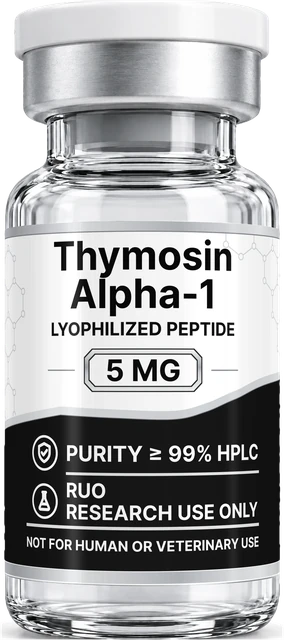
Thymosin Alpha-1 is a biologically active peptide, which has garnered much attention from the scientific community due to the involvement of the peptide in the field of immunology and infectious disease study. The peptide, known by various names such as TA1, Tα1 or thymalfasin, is a 28-amino-acid chain and has been studied in relation to T-cell function, dendritic cell activity and immune regulation among others.
The growing attention to Thymosin Alpha-1 peptide research is partly due to the fact that the compound seems to work on more than just a single biological pathway, but interacts with different parts of the process. Thymosin Alpha-1 peptides have been studied in lab and clinical research concerning immune dysfunction, infectious diseases, inflammation and vaccines among others.
Researchers from Australia interested in finding Thymosin Alpha-1 Australia need to consider issues of product quality, documentation, batch traceability and research handling of the material.
What Is Thymosin Alpha-1?
Thymosin Alpha-1 is a 28-amino acid peptide first described as a constituent of the thymosin fraction 5, which was prepared from thymus gland. The naturally occurring peptide is known for its role in immune system regulation, and thymalfasin is the term used to describe the synthetic form of the peptide.
Extensive scientific studies have been performed to examine immunoregulatory effects of TA1. Research articles have discussed its impact on T lymphocytes, dendritic cells, macrophages, NK cells and other immune system components.
Differently from peptides that were mostly studied as molecules responsible for growth hormone signaling or structural elements of tissues, Thymosin Alpha-1 is mostly related to research on immune response, cellular signaling, immune homeostasis and inflammation.
Why Is Thymosin Alpha-1 Being Studied?
The rationale for studying Thymosin Alpha-1 is due to the complex interactions between various cells, receptors, and signalling molecules involved in immune system functioning. TA1 has been proposed to modulate various components of this intricate system, resulting in great scientific interest in TA1 as a tool for immune modulation research.
Important areas of research in which TA1 has been studied include:
- T-cell maturation, differentiation, and activation
- Functioning and antigen presentation by dendritic cells
- Natural killer cell activation
- Signalling by macrophages
- Toll-like receptor pathways
- Regulation of cytokines and chemokines
- Immune responses (innate and adaptive)
- Immune dysfunction and immunosenescence research
- Human response modelling in cases of infectious diseases
- Research on vaccine response
In addition to that, TA1 has been studied in the field of hepatitis research, sepsis, immune suppression and immune responses in oncology. Nonetheless, the quality of evidence and conclusions drawn from each of these fields differ greatly.
How Does Thymosin Alpha-1 Work?
The bioactivity of Thymosin Alpha-1 peptide is linked to its effect on the immune system. It does not just “boost” the immune system, but the studies look into the impact TA1 has on immune coordination and normalization of response at certain experimental conditions.
An interesting field of research of TA1 concerns Toll-like receptors (abbreviation TLR). These receptors are involved in sensing the biological signals characteristic of pathogens or cellular distress. The interaction of Thymosin Alpha-1 and TLR-associated signalling pathway is one of the areas of the studies.
TA1 research is also carried out concerning the activity of dendritic cells that are important for the process of antigen presentation and the interrelation of innate and adaptive immune system. Other areas of research are T-cell differentiation, the activity of natural killer cells, macrophages, and cytokines.
The biological effect will depend on the experimental design, concentrations and other factors; therefore, methodology and results interpretation are important.
Understanding Thymosin Alpha-1 Dosage
The term Thymosin Alpha-1 dose is commonly found when searching the Internet, but it is important to understand that dosage cannot always be interpreted as such in relation to other circumstances.
In case of scientific research, the dosage will depend on such parameters as:
- used experimental model;
- purpose of the research;
- whether the experiment takes place in vitro or in vivo;
- length of experiment;
- the concentration needed;
- the method of administration defined in the research.
For conducting an experiment, researchers can only use scientifically validated procedures and published research articles. The number of product strength marked on the vial does not mean that it is the experimental concentration or a dose for people.
Thymosin Alpha-1 and Research Quality
The credibility of peptide studies is greatly affected by quality of materials and their documentation. While choosing the TA1 peptide for experiments, it is necessary to pay attention to something besides purity percent in its title.
Some of the important characteristics are the identity of the peptide, its purity, documentation of each batch, information about storage and packaging.
HPLC, or high performance liquid chromatography, can be used to determine peptide purity. Mass spectrometry can help to confirm molecular identity. Researchers must know what each of those methods proves and whether there is the right documentation for each batch.
Consistency becomes an important thing while comparing results of different experimental groups or redoing the experiment.
Thymosin Alpha-1 in Australia
There has been a growing interest in thymosin alpha-1 Australia and peptides Australia research in relation to growing scientific interest in peptides in general. Universities, biotech companies, and independent laboratories in Australia are still conducting studies on cellular communication, immunology and peptides.
Nevertheless, research materials and therapeutic products are not automatically governed by the intended use principle. Research products supplied only for the purposes of research should be presented accordingly to their true intended use, without any therapeutic claims not substantiated.
Researchers in Australia are recommended to consider factors such as transparency from the supplier, documentation, storage considerations and regulatory obligations prior to obtaining peptide materials. Regulatory obligations may vary and therefore current regulatory guidance from relevant Australian bodies should be considered in case of therapeutic supply/importation/human application.
What to Consider Before You Buy Thymosin Alpha-1
Prior to purchasing Thymosin Alpha-1 peptide in Australia, scientists must determine whether the material is suitable for use in the lab experiment.
It is important to consider the quality, batch tracing, Certificate of Analysis, packaging details, and storage considerations of the material. The best research suppliers will provide all the details of the products and will not make false claims turning research materials into medicinal products.
Price is not the only factor in determining a supplier’s reputation. Inappropriate documentation, batch description, or even storage may influence the reproducibility of research results.
Scientists must also verify whether the stated intended use of the material is applicable to the experiment they want to perform.
Safety and Current Research
The scientific value of Thymosin Alpha-1 is proven by years of study, yet the quality of proof varies depending on the specific research. In some cases there is significant clinical evidence, while in others the research is still experimental or needs further investigation.
Modern research keeps focusing on Thymosin Alpha-1 in relation to immunity, functioning of T-cells, models of infection, inflammation and aging of the immune system. Systematic reviews in some fields showed some interesting data and identified the drawbacks in research such as heterogeneity of the sample, small number of participants, and different methodology of research.
In laboratory research proper storage, handling and disposal must be followed according to protocols of the institution. Results of research should not be viewed as evidence that supports human use.