 AU
AU
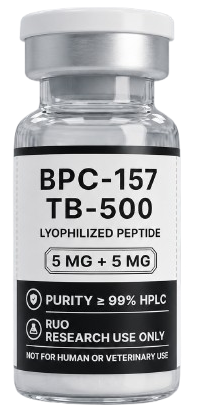
BPC-157+TB-500 is an experimental research peptide formula made up of two peptides, which are examined in relation to biological experiments related to tissue, cell movement, angiogenesis, vascular communication and repair processes.
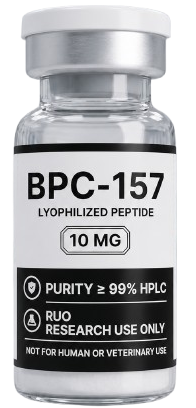
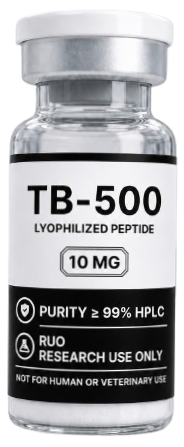
This formula is composed of 5 mg of BPC-157 and 5 mg of TB-500 in lyophilized form for research use only. Although these two are commonly examined together, they have separate molecular structures and examined through different research experiments.
BPC-157 research experiments are mainly focused on gastrointestinal biology, vasculature experiments, nitric oxide biology and connective tissue experiments. TB-500 is researched in relation to thymosin beta-4 biology, actin biology, cell migration and tissue remodeling experiments.
Research studies on these two are currently limited, especially in humans. BPC-157 and TB-500 should thus be considered based on the evidence from research only.
What Is BPC-157 + TB-500?
This product consists of BPC-157 and TB-500, and serves as a combination research peptide compound to be used in laboratory research on both biologically separate compounds at the same time.
BPC-157 is a synthetic peptide consisting of 15 amino acids and called the Body Protection Compound 157. Laboratory investigations have been conducted in order to discover the connection between BPC-157 and angiogenic signalling, nitric oxide, biology of gastrointestinal tissues, fibroblast function, and vasculature.
TB-500 is a synthetic peptide that is being researched for its thymosin beta-4-related biological properties. Thymosin beta-4 is an actin-binding peptide that was investigated concerning cell migration, cytoskeleton formation, angiogenesis, and tissue remodelling.
This combination of BPC-157 and TB-500 is of interest to scientists due to their connection to different areas of laboratory investigation.
Why Is BPC-157 + TB-500 Being Studied?
Interest in this peptide combination is related mostly to the studies that deal with natural processes of tissue repair and reactions of cells after experimentally induced tissue damage.
Fields of study that have relevance to these peptides include:
- angiogenesis and blood vessel formation models;
- fibroblast migration and cell proliferation;
- studies of tendons, ligaments and connective tissue;
- cytoskeletal arrangement and actin dynamics;
- inflammation signal transduction pathways;
- vascular integrity and endothelial reactions;
- extracellular matrix remodeling; and
- muscle and soft tissue research.
Studies with BPC-157 are numerous in the preclinical literature, primarily animal studies. Investigations with TB-500 need to be understood in connection with the wider scientific literature on thymosin beta-4, although scientists need to differentiate between particular synthetic peptide fragment and full-length naturally occurring peptide.
It is very important while reviewing peptide studies quality. Results obtained during investigations with thymosin beta-4 can’t always be transferred to any form of TB-500.
How Does BPC-157 + TB-500 Work?
The full biological activity of the BPC-157 and TB-500 peptide combination is not currently known through any single proven mechanism. Laboratory-based research, on the other hand, explores multiple different signalling pathways and cellular mechanisms.
BPC-157 Research Mechanisms
Laboratory studies have focused on examining BPC-157 in the context of nitric oxide signalling, vascular function, angiogenic signalling pathways and cellular migration. Preclinical studies have additionally researched the possible role of growth factor signalling pathways and tissue-specific cellular reactions.
Proposed mechanisms of actions are subject of scientific inquiry and cannot be considered proven therapeutic mechanisms in humans.
TB-500 Research Mechanisms
Studies of TB-500 are carried out in connection with the signalling pathways of thymosin beta-4, specifically actin signalling pathways and cell motility. Actin is a protein which plays an important role in cellular movements and structure.
Scientific research of thymosin beta-4 includes the study of its effects on angiogenesis, cellular differentiation, inflammatory signalling and extracellular matrix organisation.
If the two peptides are studied in combination, it can be investigated whether the compounds affect any complementary or separate pathways. Yet synergism is a claim that needs to be proven experimentally.
Understanding BPC-157 + TB-500 Dosage
The product contains a defined material quantity of:
BPC-157: 5mg
TB-500: 5mg
Total peptide content: 10mg per vial
BPC-157 dosage, TB-500 dosage and BPC-157 TB-500 dosage are common search terms on the internet. There is, however, no standardized or officially approved dosage for human usage in research with respect to this research combination.
Experimentation dosage in laboratory setting is influenced by a number of elements such as research model, experiment design, test used, exposure period, mode of administration in research model and objectives of the experiment.
Scientists need to apply approved dosages, control measures and procedures. Dosage guidelines available on the internet are not alternatives to scientific methods of experimentation.
BPC-157 + TB-500 and Research Quality
Quality research becomes especially critical while appraising experimental peptides. A high value of the stated purity percentage does not provide full information about quality material.
Researchers assessing a mixture of BPC-157 TB-500 should take into account:
- identification of the peptides;
- purity of the peptides;
- data about HPLC;
- mass spectroscopy where applicable;
- batch or lot number;
- Certificate of Analysis;
- specific conditions for storage;
- material quantity;
- integrity of packaging;
- analytical records traceability.
If the material is a combination of peptides, then the documentation should contain clear information about each peptide used in the mixture and about its quantity. Researchers should also separate manufacturer’s specifications from the results of independent analyses.
Literature should also be analyzed in such a way. Results of in-vitro experiments, results of animal testing, and human trials cannot be equated to each other.
BPC-157 + TB-500 in Australia
The interest in researching peptides has grown in Australia, including search queries such as BPC-157 Australia, TB-500 Australia, and BPC-157 TB-500 Australia.
Researchers need to note that just because something is available on the Internet doesn’t mean that it is therapeutically approved or clinically effective or appropriate for human use. The requirements of Australian regulators may change as well, and the current information needs to be verified with the appropriate regulators.
BPC-157 and TB-500-containing products have been included in the list of unapproved peptide products that haven’t undergone evaluation by the TGA regarding their safety, quality, and effectiveness.
The research substances must be identified correctly and mustn’t be confused with approved medicines or established therapies.
What to Consider Before You Buy BPC-157 + TB-500
In assessing the suitability of a BPC-157 TB-500 peptide cocktail blend for scientific research purposes, scientists must look at more factors than just cost and marketing hype.
The identity and traceability of the product in question must be considered. In addition, the material quantity mentioned in the list must mention how much is in each substance rather than just the total amount in the vials.
Before choosing the research material, assess its Certificate of Analysis, analysis process, batch numbers, storage instructions, and the source of supply.
Researchers need to be careful about the claims made. Claims of curing, healing, injury repair, etc., are not valid based on current research findings.
Safety and Current Research
The safety data for this combination has not been defined through any human clinical trials performed on a sufficiently large number of participants.
The majority of the scientific data regarding BPC-157 can be found in pre-clinical studies, while the scientific information related to TB-500 is often linked to the biological study of thymosin beta-4. Both of these sources must be considered carefully.
Adverse effects, interactions, pharmacodynamics and consequences need to be characterized further. In that regard, the present scientific interest in this topic should not be confused with safety and efficacy.
The product is designed for laboratory research use only.