 AU
AU
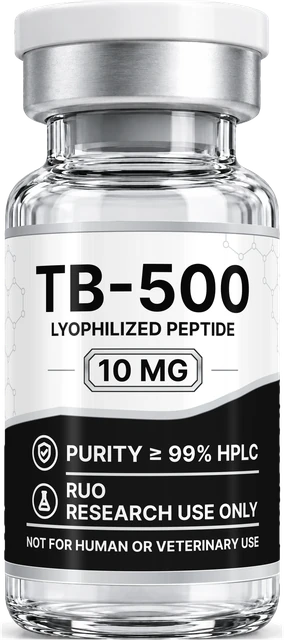
TB-500 peptide is an artificial chemical used in research which mimics the natural biological effects of thymosin beta-4 (Tβ4), a natural peptide hormone which plays roles in actin binding, cell movement and tissue repair. TB-500 research has become more popular among laboratories that study cell migration, blood vessel formation, inflammation signalling and tissue regeneration.
The TB-500 10mg formulation is an accurate amount of lyophilized peptide sample for scientific research. Scientists researching TB-500 in Australia need to evaluate the identity, purity and documentation of TB-500 samples before acquiring any scientific materials.
What Is TB-500?
TB-500 is most frequently characterized in scientific publications and regulatory agencies as a short synthetic peptide derived from thymosin beta-4. On the other hand, Tβ4 refers to a naturally occurring 43 amino acids-long peptide that is abundantly found in mammalian tissues and known as an important G-actin-sequestering agent.
TB-500 peptide and its parent protein, Tβ4, cannot be scientifically considered as identical substances. Many scientific publications deal with Tβ4 and not commercial peptide TB-500. Such information is necessary to evaluate the mechanism of action and results of TB-500 peptide research.
The reason for scientific interest in Thymosin Beta-4 is the role of this protein in processes of cell migration, angiogenesis, inflammation control and repair. Various experimental studies on skin, cornea, cardiovascular system and nervous system were reviewed in scientific literature.
Why Is TB-500 Being Studied?
Interest in TB-500 is mainly linked to the science behind thymosin beta-4 and its impact on cellular organization and repair physiology.
The following are some major research subjects:
- cell motility and cytoskeleton regulation;
- actin interaction and G-actin stabilization;
- angiogenesis and endothelial cell physiology;
- wound-healing models;
- inflammatory signaling cascades;
- regeneration and tissue remodeling;
- soft tissue and musculoskeletal research.
Research involving Tβ4 in animal models has described effects on endothelial cell motility, attachment, tubulization, and angiogenesis. Research using Tβ4 in animals has also involved wound closure and epithelialization. Nonetheless, such results cannot be construed as evidence that a TB-500 10mg research chemical product yields any proven therapeutic benefits for humans.
How Does TB-500 Work?
Biology-related mechanisms related to TB-500 are usually considered based on the thymosin beta-4 research.
Firstly, there is an actin regulation mechanism. Actin is the structural protein needed for maintaining cell shape and its movement. The protein Tβ4 binds G-actin and plays an important role in the actin regulation process.
Secondly, there is a cell migration mechanism. The controlled cell movement is very important in many tissue repair and regeneration laboratory models.
Scientists also research the phenomenon called angiogenesis, which represents a biological process during which new blood vessels form from preexisting ones. The experimental Tβ4 research considered such mechanisms as endothelial migration and vascularization in the wound repair model.
Other biological mechanisms researched include inflammatory signalling, cell survival, interaction with extracellular matrix and regenerative response. These mechanisms are still actively researched by scientists and need to be analyzed depending on the specific substance, model and design of the study.
Understanding TB-500 Dosage
While searches for terms like TB-500 dosage, TB-500 dose and TB-500 10mg dosage are frequent, a significant difference must be made clear between the amount of substance used experimentally and the dose for humans.
TB-500 10mg vial is just a description of how much of the peptide substance there is in one vial. It cannot set any standard amount that should be used for human treatment.
For experiments, the concentration to be used can vary depending on several things, which include:
- the design of the experiment;
- whether the experiment will be done in vitro or in vivo;
- how sensitive the assay is;
- the objective of the experiment;
- the concentration range;
- how samples are to be prepared.
The researcher can make a protocol based on scientific literature and lab standards.
TB-500 and Research Quality
Purity percentage alone does not determine the quality of the research work. While assessing the suppliers of TB-500 peptide Australia or the research chemicals themselves, laboratories should take into account whether there are relevant analytical or batch data on the substance.
The factors which could determine quality include identity verification, purity testing by means of chromatography, molecular weight verification, batch traceability, storage information, and, if possible, a specific certificate of analysis for the batch.
Chromatographic purity may be analyzed using HPLC, whereas mass spectrometry would be helpful in molecular identification. These two techniques address different aspects of analysis and thus cannot be regarded interchangeably.
TB-500 has several names and molecular specifications; hence it is important to identify the exact sequence of the peptide.
TB-500 in Australia
Interest in TB-500 Australia, TB-500 peptide Australia and related research compounds has grown alongside wider scientific interest in peptides. However, researchers must distinguish legitimate laboratory procurement from therapeutic promotion or personal use.
Australian regulatory materials have specifically discussed TB-500 and its relationship to thymosin beta-4, while historical TGA enforcement documents also demonstrate regulatory scrutiny of therapeutic advertising involving TB-500 and Tβ4.
Before sourcing TB-500 in Australia, organisations should consider the intended purpose, applicable regulatory requirements, institutional approvals, import conditions where relevant and the documentation supplied with the material.
What to Consider Before You Buy TB-500
Scientists looking to purchase TB-500 Australia, TB-500 peptide for sale or TB-500 10mg Australia should focus on documenting and tracking materials and not solely on pricing or marketing alone.
Is the vendor able to supply details of product specifications, batch number, testing details, storage guidelines and use label as research only?
Another important point is to examine whether the Certificate of Analysis matches the specific batch of product supplied. Generic test results that cannot be linked to any batch do not contribute much to tracking and documentation purposes.
Peptide stability can be compromised by cold chain management, packaging and exposure to environmental conditions unsuitable for storage. This implies that storage guidelines provided by the supplier should be checked even before receiving and after delivery.
Safety and Current Research
TB-500 is a research chemical and caution must be exercised regarding the supporting scientific information. Much of the biological information typically linked to TB-500 involves thymosin beta-4, animal research, cell lines, or particular laboratory formulation studies.
A 2026 scoping review evaluating Tβ4 and TB-500 research pointed out the importance of distinguishing between thymosin beta-4 literature in general and the much more restricted body of evidence regarding TB-500 itself.
Laboratory staff are encouraged to employ proper risk assessment, proper protective clothing, appropriate laboratory practices and storage documentation. Laboratory materials are not to be marketed as treatment products without proper authorization.