 AU
AU
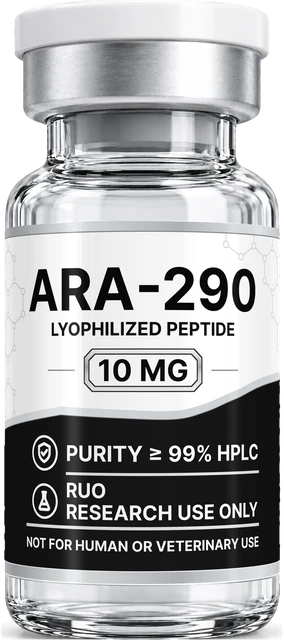
ARA-290 is an experimental peptide that has received scientific attention owing to its association with erythropoietin signaling pathways, neuroprotection and regulation of inflammation. Known as cibinetide as well, ARA-290 is currently being studied in laboratories, animals and clinical settings to gain further understanding of how cells respond to injuries, inflammation and neuropathy.
Unlike the whole molecule of erythropoietin (EPO), ARA-290 was engineered to mimic only some of its tissue-protective signaling pathways without primarily inducing red blood cell formation. Scientific literature includes studies on ARA-290 related to neuropathy, small nerve fiber biology, inflammatory pathways, metabolism and tissue regeneration.
For scientists conducting studies on ARA-290 peptide, it is crucial to distinguish between experimental results and existing clinical data. The peptide has already been tested in humans, but its overall biological effects, safety profile and possible uses are still being researched.
What Is ARA-290?
ARA-290, also known as cibinetide, is a synthetic 11 amino acid peptide that is based on the three dimensional structure of erythropoietin. The compound is often referred to in academic sources as an erythropoietin-derived non-hematopoietic peptide since it has been developed to study tissue protecting effects independent of the red blood cell producing action characteristic for EPO.
It is important to note that the peptide is connected with the study of the innate repair receptor (IRR) which includes the erythropoietin receptor and the beta-common receptor as a receptor complex that acts through a signaling pathway.
ARA-290 can be therefore considered relevant for various experimental areas including neurobiology, inflammation research, peripheral nerves study and tissue protection.
Why Is ARA-290 Being Studied?
The scientific motivation behind ARA-290 stems from the opportunity to investigate selected protective mechanisms related to erythropoietin signaling without inducing any of its main erythropoietic activities.
Fields of study in which ARA-290 is used are:
- neuropathic pain models and sensory nerve signaling;
- study of small fiber neuropathy;
- regulation of inflammatory pathways;
- models of peripheral nerve injury and regeneration;
- oxidative and metabolic stress response of cells;
- neuroprotection and neuronal survival;
- tissue repair and inflammation resolution.
Clinical trials have been conducted on the use of ARA-290 on patients suffering from small fiber neuropathy associated with sarcoidosis and type 2 diabetes. This is important research material, but it is not proof that ARA-290 is proven to treat these diseases.
How Does ARA-290 Work?
Ara-290’s potential mechanism of action revolves around the activation of the innate repair receptor. Studies indicate that the above pathway is linked with anti-inflammatory, anti-apoptotic and protective signaling in case of cellular stress or damage.
ARA-290 studies have focused on downstream biological mechanisms such as inflammatory factors, immune cells function, neuron signaling and cellular survival. The compound’s association with microglial response and inflammation after nerve injury has been assessed in animal studies.
Recent pre-clinical studies are still assessing possible neuroprotective mechanisms in case of cerebral ischemic injury. However, just because certain mechanisms are observed in the experimental setting does not mean the same effect will be seen in human subjects.
Understanding ARA-290 Dosage
The ARA-290 dosage is a complex phrase that needs clarification. Dosage for experiment depends on research methods and purposes, as well as mode of administration and other factors.
The dosing protocols of published studies were created specifically for the experiment and should not be extrapolated to personal use.
In laboratory experiments, it is necessary to establish dosages based on the literature, institutional standards and objectives of the experiment. Some possible parameters are concentration, duration of administration, frequency, sampling material, experiment model and endpoints.
The ARA-290 10 mg vial size is the amount of peptide that is provided. This information cannot be considered a recommended dose or schedule.
ARA-290 and Research Quality
Quality of the ARA-290 research material can never be estimated based only on the product name or vial strength.
Factors that affect the quality of the peptide include peptide identity, purity determination, batch or lot identification, storage information, and analytical documentation.
Peptide identity can be confirmed using mass spectrometry , whereas purity can be estimated using HPLC technique. The two techniques answer different questions, which is why it is important for researchers to look at all documentation and not focus solely on one purity percentage.
A certificate of analysis should always be linked to a batch or lot number because this allows researchers to understand what documentation the provided material is associated with.
ARA-290 in Australia
The interest in research regarding ARA-290 in Australia is associated with the general focus in the sciences on experimental peptides and research materials. Scientists need to be clear about the difference between laboratory research materials and therapeutic goods which are meant to diagnose, prevent or treat any disease.
Therapeutic goods in Australia are controlled by the Therapeutic Goods Administration. The regulation of medicines needs an adequate evaluation of whether the medicines must be listed in the Australian Register of Therapeutic Goods. There are pathways to get some unapproved therapeutic goods under certain conditions.
ARA-290 researchers should consider the purpose of the research materials they are going to use.
What to Consider Before You Buy ARA-290
Prior to purchasing ARA-290 for research purposes, the selection procedure needs to prioritize the appropriateness of the material for use rather than any other criteria.
Look into the quantity of the material along with its form and batch number. In addition, make sure that documentation is provided and can be correlated with the batch you are interested in. Storage conditions should also be clearly indicated.
When choosing between suppliers of ARA-290 10mg, you need to pay attention to:
- traceability of the batch;
- documentation of peptide identity;
- test methods applied;
- availability of Certificate of Analysis;
- quantity and specification of the material;
- storage conditions;
- research use details.
It is necessary to approach with caution claims of guaranteed results based on preliminary data.
Safety and Current Research
The use of ARA-290 has been studied through preclinical and early human experiments, especially with respect to neuropathy and inflammatory signaling. A few publications have mentioned good observations regarding tolerability in their particular experimental design, but there is a need for more research to be carried out.
Evidence varies widely depending on the proposed use of the substance. Experiments performed using cells, animals, or a limited group of human subjects should not be confused with clinical trials.
It still is a topic of interest in experimental research about the repair receptor, neuroinflammation, peripheral nerves, and cell response to injury. Future studies will shed light on its workings and significance to research.