 AU
AU
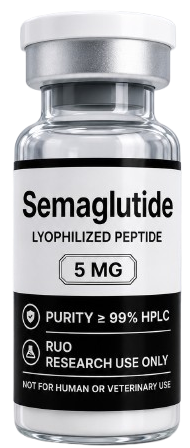
Semaglutide is a man-made peptide drug which is a glucagon-like peptide-1 (GLP-1) receptor agonist that has become the subject of much metabolic and pharmacological research. Semaglutide is investigated to understand more about GLP-1 receptor signaling, glucose regulation, insulin secretion, appetite control, and gastric motility.
Searches for semaglutide Australia have grown considerably along with the increase in scientific and clinical interest in GLP-1 receptor agonists. It is, however, necessary to differentiate between semaglutide drugs prescribed by medical professionals and the materials of semaglutide that are used for research only.
The researcher working with the semaglutide peptide materials needs to know about their purity, identity, batch information, stability, and experiment design. Knowledge of these characteristics enables laboratories to assess if a substance is fit for scientific testing.
What Is Semaglutide?
Semaglutide is an engineered peptide analogue of human glucagon-like peptide-1 or GLP-1. GLP-1 is an incretin hormone that takes part in multiple physiological functions, including insulin release dependent on glucose level, glucagon regulation, signaling and digestion.
A semaglutide molecule has been altered to have prolonged activity in comparison to natural GLP-1. This alteration increases resistance to enzymatic breakdown and ensures prolonged action of the compound, which makes semaglutide ideal for investigation of continuous GLP-1 receptor stimulation.
In scientific papers, semaglutide is often mentioned in context of research concerning:
- GLP-1 receptor signaling
- Glucose metabolism and glycaemic regulation
- Insulin secretion
- Glucagon inhibition
- Appetite and satiety signaling
- Gastric emptying
- Energy intake and expenditure
- Adipose tissue physiology
- Cardiometabolic investigations
Semaglutide is also an active component in medicinal drugs. Semaglutide used for scientific purposes must not be considered as medicines registered for clinical use.
Why Is Semaglutide Being Studied?
The field of semaglutide has been extended due to the involvement of GLP-1 signalling in various metabolic processes. Scientists want to study the effect of prolonged receptor activation on interorgan crosstalk between the gastrointestinal tract, pancreas, brain, and metabolically active tissues.
The first area of study is glucose homeostasis. GLP-1 receptor agonists are explored to examine their effect on insulin secretion in a glucose-dependent manner and glucagon signalling. This way, it is possible to understand the effect of peptide-mediated signalling under changing metabolic conditions.
The next area of interest is appetite regulation. Laboratory and clinical studies have already revealed the connection between GLP-1 receptor stimulation and satiety, food intake, and energy balance. Delayed gastric emptying is also studied since the alteration in gastrointestinal transit affects nutrient absorption and metabolism after a meal.
Obesity research, cardiovascular research, and other studies related to metabolic dysfunction are also among the areas where semaglutide peptides are researched.
How Does Semaglutide Work?
Semaglutide acts mainly via GLP-1 receptor activation. GLP-1 receptors are found in various metabolic regulatory tissues.
Once bound to these receptors, semaglutide will be able to activate intracellular signaling pathways. In experiments on pancreatic cells, this will be related to glucose-dependent insulin release. This means that the insulin-mediated action will depend on glucose concentration rather than being fully independent from glucose.
GLP-1 receptor signaling is also known for reducing glucagon release in some metabolic conditions. Given that glucagon is responsible for glucose production in the liver, this pathway is relevant for glucose homeostasis experiments.
Other experiments are aimed at studying central appetite signaling. GLP-1 receptor signaling pathways can influence circuits related to hunger, satiety, and food consumption. Effects on the gastrointestinal tract, such as gastric emptying, are also important for the research on semaglutide.
The full biological response is complicated. That is why the research on semaglutide considers receptor pharmacology, dose-response studies, organ specificity, pharmacokinetics and metabolic adaptation.
Understanding Semaglutide Dosage
Semaglutide dosing is one of the key subjects that researchers often search in connection with semaglutide, but any information about the dosing of semaglutide needs to be considered with reference to the context.
Approved semaglutide drugs have certain dosing regimens that are developed as a result of clinical trials and medical prescriptions. Such dosing regimens cannot be used for research materials of semaglutide.
When designing experiments with semaglutide, it is necessary to consider such factors as:
- Design of the experiment
- Model in vitro/in vivo
- Objective of the research
- Concentration range
- Duration of the experiment
- Route of administration in the experiment
- Species/model of cells
- Publicly available protocol
When designing an experiment, it is necessary to rely on the validated protocol, peer-reviewed articles and internal regulations.
Labeling of the semaglutide vial with the specific quantity refers only to the quantity of the substance contained in the vial. It does not mean the concentration of the research reagent or the dose in the experiment.
Semaglutide and Research Quality
It is important to conduct the quality assessment of semaglutide in case of its evaluation for laboratory research purposes. The statement of percentage purity does not give an adequate picture of the identity, consistency, and appropriateness of peptide materials.
High-performance liquid chromatography (HPLC) is extensively used in assessing peptide purity profiles. Mass spectrometry can be used as an additional method for identifying the molecular identity through comparison with the calculated molecular mass.
While assessing the quality of semaglutide peptides, researchers need to take into account the following points:
- Specific batch Certificate of Analysis
- HPLC analysis data
- Molecular identity confirmation with mass spectrometry
- Peptide quantity specification
- Batch/lot traceability
- Appropriate packaging
- Storage details
- Handling information
The ideal scenario for the Certificate of Analysis would be to provide information on the batch supplied. Researchers should look at what analysis was conducted and not just at percentage purity numbers.
Semaglutide in Australia
There is interest in semaglutide in Australia for both medical purposes and scientific research. These are two different aspects and should not be mixed.
In Australia, semaglutide-based therapeutic goods are classified as prescription medicines. It is the Therapeutic Goods Administration which regulates therapeutic goods in Australia, providing details on semaglutide medicines approved in Australia and safety standards.
The Australian market has faced issues related to counterfeits and unauthorized semaglutide-based products. This means that the sources and products should be checked.
As for research institutions, semaglutide research goods should be considered in terms of their purpose, documentation, analytical data and relevant Australian regulations. Research products cannot be regarded as prescription medicines.
Those individuals who require semaglutide for personal use should contact a qualified healthcare practitioner.
What to Consider Before You Buy Semaglutide
Prior to obtaining semaglutide for any valid lab work, pay close attention to evidence-based proof as opposed to advertising.
First, you need to figure out if the company specifies that the product is meant for research purposes, and provide some technical details. Pay special attention to batch number, technical specifications, storage instructions and analysis documentation.
Second, have a careful look at the Certificate of Analysis. Ensure that the certificate specifies the same batch as the vial itself, and that analytical techniques such as HPLC and mass spectroscopy are described in detail.
Third, take into account the issue of storage and transport. As peptide stability may depend on temperature, moisture, light and other factors, proper packaging and storage instructions become an important part of research.
Fourth, keep in mind the legal aspect. In Australia, semaglutide pharmaceuticals are prescription drugs and research materials should not be mistaken for any pharmaceutical drug.
Safety and Current Research
A lot of clinical studies have been conducted on semaglutide, but ongoing research is still carried out in order to learn about its short-term and long-term impacts.
Some of the adverse events that were discovered during clinical research included gastrointestinal problems like nausea, vomiting, diarrhea, and constipation. Gallbladder complications, pancreatitis alerts, possibility of hypoglycemia while using semaglutide with some glucose-lowering drugs, and other safety matters are considered.
Ongoing research includes metabolic, cardiovascular, body composition, discontinuation, weight maintenance and many more aspects of GLP-1 receptor signaling.
Semaglutide research reagents should be managed by qualified personnel in the laboratory setting. It is not to be used for self-experimentation or as an alternative to prescribed medications.