 AU
AU
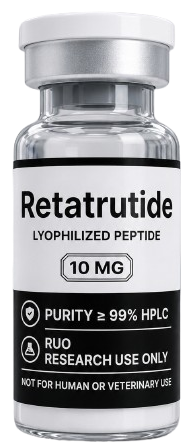
Retatrutide is sometimes referred to by shortened or alternative names in research discussions. Common variations include Reta, Reta peptide, R3ta, and R3ta peptide. Misspellings such as Reda peptide and Ratatouille peptide may also appear in searches. These terms generally refer to retatrutide, an investigational triple-agonist compound being studied in clinical research.
In Australia, researchers may encounter these variations when searching scientific resources, supplier catalogues, or online discussions. Retatrutide remains the clearest and most appropriate name to use when referring to the compound.
What Is Retatrutide?
Retatrutide, a development code named LY3437943, is an artificial peptide-based triple receptor agonist. It was synthesized to act on GLP-1, GIP and glucagon receptors simultaneously.
Each pathway performs a different function in metabolism. Activation of GLP-1 receptor pathways affects glucose-stimulated insulin release, regulation of appetite and gastrointestinal function. The activation of GIP receptor pathway involves nutrient response and insulin release, whereas activation of the glucagon receptor pathway impacts the regulation of liver glucose and energy expenditure.
The use of these three pathways together makes the retatrutide unique as compared to single and dual receptor agonists. Scientists are investigating the potential of using them together for complementary metabolic results.
Clinical development of retatrutide is now being performed in a number of trials, which include Phase 3 studies in patients with obesity and related metabolic diseases.
Why Is Retatrutide Being Studied?
The primary reason for scientific interest in retatrutide lies in its triple agonist effect. Since metabolic control consists of several interrelated biological mechanisms, scientists are studying whether the simultaneous impact on several pathways will affect more metabolic processes.
The topics of the modern research concerning retatrutide are the following:
- Regulation of body weight and energy homeostasis;
- Signalling for appetite and satiety;
- Glucose homeostasis;
- Insulin sensitivity and metabolic effects;
- Lipid metabolism;
- Energy expenditure;
- CVD outcomes of obesity;
- GLP-1, GIP and glucagon interaction.
Researching retatrutide does not imply that all the benefits mentioned above have already been proved. The clinical efficacy and long-term safety need to be examined in special trials.
How Does Retatrutide Work?
Retatrutide functions experimentally by acting as an agonist on three metabolic receptors simultaneously.
Activation of GLP-1 receptors is investigated with regard to satiety, appetite control, insulin release and stomach functioning. Activation of GIP receptors is related to metabolic signalling that depends on nutrients as well as on insulin production in the pancreas.
Glucagon signaling adds another research focus to this study. Glucagon signalling is usually considered a factor in glucose production by the liver; however, scientists also investigate the relation of glucagon signaling with lipids and energy expenditure.
The combination of these mechanisms creates an opportunity for scientists to study coordinated metabolic signaling. The ratio of receptor activation is an important feature of pharmacology of the compound, which distinguishes it from GLP-1 agonists and GLP-1/GIP dual agonists.
Understanding Retatrutide Dosage
Retatrutide dosage and retatrutide dose searches can indicate the amount of drug used in clinical trials that have been published. These should not be confused with directions for personal use.
Clinical trials follow set protocols, participant qualifications, escalating dosing regimens, testing procedures and controlled doses. The label on a research vial, retatrutide 10 mg, indicates the total amount of the substance in the vial but does not determine the human dose or regimen.
For laboratory experimentation, the experimental concentration is based on considerations including study protocol, test method, research model, analytical method and institution’s protocol. Investigators should rely on scientific protocols and procedures for their experiments rather than consumer dosing information available online.
Retatrutide and Research Quality
Quality becomes very crucial while appraising peptides as research materials. The purity percent by itself does not give an adequate appraisal of the research material.
The following aspects should be taken into account – identification, tracing, analysis, and proper storage. High Performance Liquid Chromatography (HPLC) could be utilized to determine purity via chromatography, whereas mass spectrometry is useful in confirming the molecular identity.
It is important that the Certificate of Analysis (COA) matches the respective batch or lot number whenever documentation is available. The researcher could also pay attention to the integrity of the packaging, the quantity of material, and storage guidelines among others.
When it comes to retatrutide peptide research, clear specifications and traceable documentation become critical.
Retatrutide in Australia
Attention to retatrutide in Australia has paralleled international interest in incretin therapies and multi-receptor agonists. Researchers and laboratories in Australia and other readers interested in scientific information need to take care to differentiate an experimental compound from a medicinal product used for therapeutic purposes.
The Therapeutic Goods Administration indicates that “therapeutic goods which are not listed on the ARTG have not been assessed by the regulator for safety, quality and/or efficacy,” even though there are some specific access provisions which may be made available under certain conditions.
Regulatory requirements may vary. All those involved with research materials in Australia should check the latest classifications, importation requirements and Commonwealth, State or Territory regulations relevant to their purposes.
Available Quantities and Batch Documentation
Those researching the purchase of retatrutide or buy retatrutide Australia should consider more than just cost or claimed purity.
When investigating sources for purchasing retatrutide research product, one should look into the name of the compound, vial size, lot number and the availability of the analytical documentation for the compound. One should verify if the COA matches the delivered lot and the methods of analysis that were performed on it.
The storage and delivery conditions should also be considered since peptides may be sensitive to temperature, humidity and multiple touches. Specifications of the product, adequate packaging and procedures of its handling are important factors to consider when comparing sources for research peptides.
The most important aspect is that research products should never be presented as medical products or treatment alternatives.
Safety and Current Research
Retatrutide is still being investigated clinically. Further trials are continuing on its efficacy, tolerability, safety, and possible use in cases of obesity and associated disorders. One of the phase 3 trials investigates the use of retatrutide in obese patients who already have cardiovascular disease.
Clinical studies findings cannot necessarily be transferred to unauthorised products purchased online. The identity, concentration, purity, sterility, and production standards of such products are likely to vary.
According to the TGA, unregistered therapeutic products have not been evaluated by TGA in relation to their safety, quality and efficacy, and provides information about the authorised access routes.
This means that further research on retatrutide should take into account the quality of evidence, the study population, the methodology and the regulatory status of the product.