 AU
AU
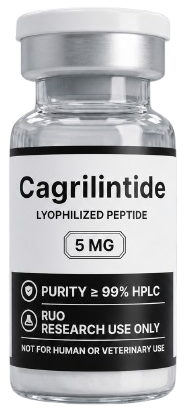
Cagrilintide is a long-acting amylin analogue that has gained much popularity in the field of metabolic peptide research. The compound is under study for its efficacy in relation to various functions, such as amylin receptor signaling, appetite control, satiety mechanisms, gastric emptying, energy balance, and weight control.
With increasing interest in research peptides related to metabolic effects, Cagrilintide has become a valuable research compound to investigate the effect of hormonal signaling on food intake and energy metabolism. Additionally, Cagrilintide is studied in conjunction with GLP-1 receptor agonist research since the amylin and GLP-1 systems function through different but possibly complementary biological pathways.
This guide will provide information about Cagrilintide, its significance in research, mode of action, research doses to consider, quality measures, and factors to consider when purchasing Cagrilintide 5 mg or Cagrilintide 10 mg in Australia.
What Is Cagrilintide?
AM833, also referred to by its development name of cagrilintide, is a synthesized analog of the hormone amylin that has been produced for longevity and stability for experimental use.
Amylin is a natural peptide hormone secreted by the pancreas in conjunction with insulin following nutrient ingestion.
The role of amylin is involved in several physiological functions that are associated with metabolism regulation. Research has identified associations with satiety and food intake through gastric emptying and interaction with metabolic peripheral signals and central nervous system receptors.
Cagrilintide was designed to imitate certain physiological effects of amylin with increased stability and longevity, making it ideal for further study. Published research identifies cagrilintide peptide as a lipidated amylin analog that is active on both amylin and calcitonin receptor systems.
Cagrilintide peptide research will be especially pertinent to researchers investigating:
- amylin receptor signaling,
- metabolic peptides signaling,
- satiety and appetite pathways,
- energy homeostasis,
- gastric emptying pathways,
- food intake regulation,
- neuroendocrine signaling,
- body weight regulation models, and
- amylin and incretin pathways.
Why Is Cagrilintide Being Studied?
The drug is currently under study mainly due to the significance of amylin in the intricate body metabolic signaling system.
Regulation of energy balance occurs by way of signaling among the gastrointestinal tract, pancreas, adipose tissue and brain. Peptides including Cagrilintide are researched to better understand the effects of hormone signaling in determining the end of meals and energy homeostasis.
An area of major focus for scientists working on Cagrilintide is the interplay of signaling in amylin and GLP-1 receptor signaling. Both systems are biologically separate from each other and researches are conducted to investigate whether the joint study of these two signaling systems could give a better understanding of complementary mechanisms in appetite regulation.
In a randomized phase 2 trial for dose-finding it was found that there are dose-related changes in body weight and waist circumference in patients treated with Cagrilintide.
How Does Cagrilintide Work?
Mechanism of Cagrilintide involves mostly its actions as an amylin analogue with prolonged duration of action.
Amylin receptors represent complexes consisting of calcitonin receptor and protein factors modifying the activity of receptor.
Activation of such signaling system is linked to neurophysiological pathways responsible for satiety and food intake regulation.
Cagrilintide is capable to impact neural pathways regulating body weight by means of the activity of amylin receptors. Modern mechanistic research deals with the effect of the compound on calcitonin family receptors and receptor-specific conformation.
The main targets of studies are satiety signaling, meal size control, delay of gastric emptying, central appetite control and energy homeostasis.
Cagrilintide is not a GLP-1 receptor agonist. The scientific significance of the drug includes the fact that it gives scientists another pathway for the investigation of metabolic regulation.
Understanding Cagrilintide Dosage
Cagrilintide dosage must be discussed because the published doses from clinical research should not necessarily be considered guidelines for laboratory experimentation or individual dosing.
A variety of doses have been studied in clinical trials, including dose escalation regimens. The dose finding trial in phase 2 was designed to test a variety of once weekly doses in a well-defined clinical setting, with clearly delineated participant criteria, monitoring procedures and methodology.
Experimental design will dictate how much of the substance should be used, what the concentration is and how long it needs to be exposed. Such considerations would include the following factors:
- experimental system;
- in vitro or in vivo system;
- period of study;
- receptor/pathway under investigation;
- sample preparation requirements; and
- validated research methodology in published research.
Cagrilintide 5 mg and Cagrilintide 10 mg refer to the amount of research material provided in the vial. It does not indicate a recommended dose.
Cagrilintide and Research Quality
However, reliable Cagrilintide research cannot be based solely on the name written on the label of the vial containing the product. The identity, purity, batch traceability, storage conditions, and analysis documentation can influence the reproducibility of your results.
When analyzing the Cagrilintide peptide material, you must examine the available Certificate of Analysis to know which analytical techniques have been applied. The High-performance Liquid Chromatography or HPLC technique may be applied to analyze the purity of the substance, and mass spectrometry can help confirm the molecular identity.
Additionally, researchers must consider the following aspects:
- batch or lot number;
- the amount of the material stated;
- documentation regarding purity;
- documentation related to analytical testing;
- storage requirements;
- integrity of packaging; and
- batch traceability from the vial to the documentation.
Cagrilintide in Australia
Cagrilintide research interest in Australia is due to overall scientific interest in metabolism studies, amylin analogues, appetite signaling and advanced peptide research.
The laboratories in Australia and researchers who want to obtain Cagrilintide peptides need to understand that there is a clear difference between research materials and therapeutic products. The regulatory situation, supply and usage of such peptides are other questions apart from pre-clinical/clinical study results.
The researchers should choose the right supplier based on the documentation and not on marketing only.
What to Consider Before You Buy Cagrilintide
In case scientists need to find where to purchase Cagrilintide in Australia, the process of evaluation needs to be based not only on the price but on the quality of research and documentation.
One needs to take into consideration such factors as specification, batch number, and access to analytical documentation before placing an order for either Cagrilintide 5mg or Cagrilintide 10mg. Information in the product description, in the vial and on the certificate of analysis should refer to the same research material.
Scientists also need to pay attention to packaging, shipping conditions, and storage instructions since peptides are highly sensitive materials that can be compromised by incorrect storage.
A reliable supplier will not promote the investigational research peptide as an approved drug and make any unfounded claims about its benefits.
Safety and Current Research
Nevertheless, Cagrilintide is still a subject of scientific and clinical studies. Clinical trials have provided information about long-acting amylin analogues; however, one needs to interpret the results based on the methodology of the study, type of subjects, dosage and duration used during the research.
Clinical trials of Cagrilintide have provided information about gastrointestinal side effects from safety issues related to Cagrilintide, and further studies are needed to assess efficacy, tolerability and longer outcomes.
Handling of research materials should be performed only by trained staff. Laboratory Cagrilintide cannot be considered as an approved drug and cannot be provided with self-administration instructions.