 AU
AU
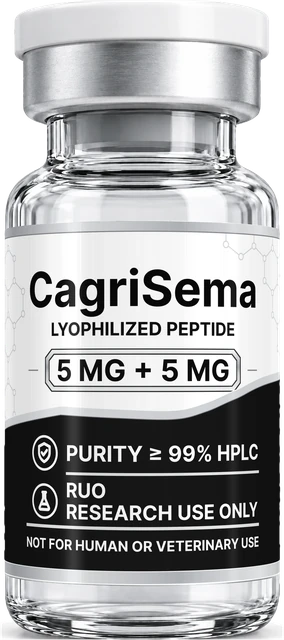
The experimental drug CagriSema is a composition of two substances which have become objects of numerous studies in metabolic research – cagrilintide and semaglutide. Research on CagriSema helps to understand the influence of complementary pathways, involving amylin receptor signaling and GLP-1 receptor signaling on appetite control, satiety signaling, glucose homeostasis, stomach function and metabolism.
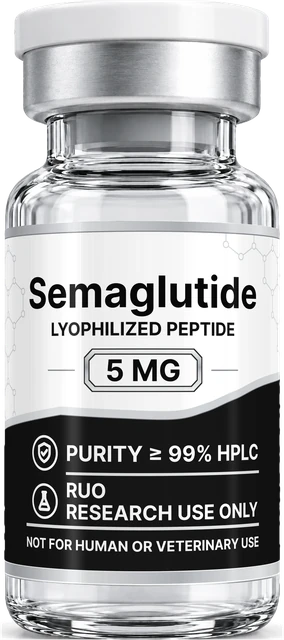
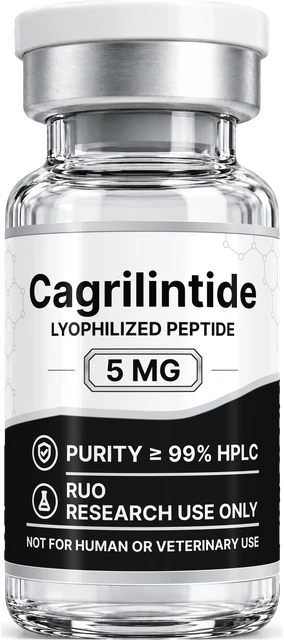
CagriSema 5mg + 5mg is a mixture of cagrilintide 5 mg and semaglutide 5 mg as a lyophilized composition. This research formulation of CagriSema is designed to be used only in a scientific laboratory setting.
Increased scientific interest in CagriSema peptides is related to the unique properties of this compound. Unlike the investigation of one receptor signaling pathway, scientists can explore the interaction between long-acting amylin analog and GLP-1 receptor agonism.
What Is CagriSema?
The combination of cagrilintide and semaglutide is known as CagriSema. The former is an extended-release amylin analog tested for amylin receptor action, and the latter is a GLP-1 receptor agonist that has been utilized extensively for metabolic investigations.
This combination is under investigation in various major clinical studies, including those dealing with obesity, overweight and type 2 diabetes. Research on CagriSema has been published in various metabolic and weight-related models.
The most intriguing feature of CagriSema from a scientific standpoint is the involvement of amylin and GLP-1 in overlapping but distinct biological pathways. There are attempts to determine whether the investigation of these signalling pathways at the same time will produce more insight into the field of appetite, energy intake and glycemia regulation.
Why Is CagriSema Being Studied?
The study of CagriSema stems from the fact that the metabolic regulation processes include several pathways related to different hormones and connected with each other. Nowadays scientists conduct studies of combinations of signalling pathways instead of studying separate pathways.
Main research fields are:
- signalling of amylin receptors and regulation of satiety;
- GLP-1 receptor stimulation;
- food intake and appetite regulation;
- glucose-dependent insulin release;
- glucagon signalling;
- gastric emptying;
- metabolic homeostasis;
- models of body weight regulation;
- glucose homeostasis and HbA1c.
Massive clinical studies were conducted on people suffering from overweight and obesity including those patients with type 2 diabetes. Also, cardiovascular effects are under investigation now.
How Does CagriSema Work?
CagriSema research focuses on two complementary signalling pathways.
Cagrilintide and Amylin Signalling
Cagrilintide is an amylin analogue that works in the long term. Amylin is a hormone that regulates bodily activities related to the feeling of satiety.
In scientific research, the impact of long-term stimulation of the amylin receptors on neural activity related to eating and satiety is studied. The long-lasting nature of cagrilintide allows for the study of its effects on amylin activity.
Semaglutide and GLP-1 Receptor Signalling
Semaglutide works through GLP-1 receptor pathway. GLP-1 pathway is linked to glucose-regulated insulin secretion, glucagon modulation, appetite signaling, and gastric function.
The rationale for CagriSema involves investigating all these pathways simultaneously. According to the current literature, the combination is termed as cagrilintide which is a long-acting amylin receptor agonist along with semaglutide which is a long-acting GLP-1 receptor agonist.
Understanding CagriSema Dosage
It is crucial to separate product quantity from the dosing in experimental/clinical studies.
The term CagriSema 5mg + 5mg vial describes the amount of substance provided for research: 5 mg of cagrilintide and 5 mg of semaglutide. This description must not be used for clinical dosing, administration guidance or treatment.
Published studies have been conducted using certain escalation regimes and protocols in clinically supervised conditions. Thus, for instance, Phase 3 clinical research was conducted to investigate weekly administration of cagrilintide-semaglutide 2.4 mg each. These protocols are relevant for clinical trials and can’t be used to describe the laboratory products.
Experimental design for laboratory research should be developed in accordance with the experimental design, purpose of the study, analysis techniques and research protocol.
CagriSema and Research Quality
The quality of peptides is a factor that should be taken into account when selecting peptides to use in a laboratory. The research using mixed peptides will need proper identification of both peptides.
Factors that should be considered in regard to quality are:
- proper identification of cagrilintide and semaglutide;
- known amount of the material;
- tracking of the batch or lot number;
- analytical information when available;
- proper storage information;
- consistency in labeling;
- prevention from contamination and environmental effects.
One should examine the entire batch documentation and not just the purity percentage that may be provided. HPLC and mass spectrometry can offer different kinds of information about material characterization and molecular identity.
CagriSema in Australia
There is also increasing interest in the potential of CagriSema in Australia, paralleled by increased scientific study of metabolic peptides, amylin analogues, incretins and metabolic signalling on multiple pathways.
Nonetheless, researchers need to make a distinction between research materials and approved therapeutics. The development of CagriSema for its use as a medicine has been studied for its use in metabolism, although the research material that is available for laboratory use cannot be presented as an approved medication.
In case Australian laboratories are considering using CagriSema for research purposes, they need to consider certain regulations related to their particular research objectives.
What to Consider Before You Buy CagriSema
It is not enough when researchers consider the cheapest option while assessing CagriSema for use in scientific studies. Researchers need to find out whether this material has correct labeling and if there is sufficient information about it.
Prior to choosing CagriSema peptide material, researchers need to evaluate the supplier’s practices in relation to batch traceability, analysis, product specifications, storage instructions and guidelines.
In the case of combination therapy, correct labeling of cagrilintide and semaglutide becomes especially vital. Australian researchers seeking CagriSema also need to find out the exact amount of material since there might be some differences between research suppliers’ vials.
Researchers must not confuse research vial strength and published clinical dosing regimen.
Safety and Current Research
CagriSema is still being researched actively. The published research has looked into efficacy and safety results within controlled clinical trials, and further trials are still looking into metabolic and cardiovascular endpoints.
The clinical research found that the investigational combination may cause side effects such as gastrointestinal side effects. This information comes from the results of clinical research and must not be considered directions for self-administration.
The research material must be used with all safety standards required for a laboratory setting. Proper personal protective equipment, secure storage, labeling, and protocols must be used when conducting experiments.
CagriSema 5mg + 5mg research material is intended for laboratory and scientific investigation only.