 AU
AU
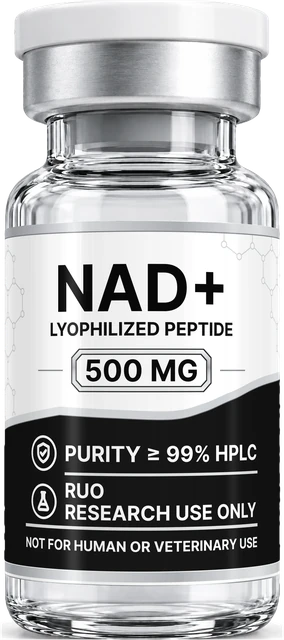
NAD+ is one of the key substances used in studies on cellular energy, mitochondria, and aging. NAD+ is an abbreviation for Nicotinamide Adenine Dinucleotide and is a coenzyme present in all living cells. NAD+ acts as a critical component of oxidation-reduction reactions, metabolism, DNA repair, cellular signaling, and enzyme mechanisms involved in metabolic regulation.
Discussion of NAD+ 500 mg and NAD+ 1000 mg research formulations is common in laboratories and analysis of cellular metabolism, mitochondria, oxidative stress, aging processes, and NAD+ dependent enzymes. In Australia, there has been a corresponding increase in interest to study NAD+ as part of the general increase in scientific interest in mitochondrial health and longevity.
What Is NAD+?
NAD+ stands for the oxidized state of nicotinamide adenine dinucleotide. Together with the reduced form NADH, it plays a role in the transfer of electrons in biochemical reactions, which is known as the NAD+/NADH redox cycle, and contributes to energy production via glycolysis, citric acid cycle, and oxidative phosphorylation.
However, besides functioning as a cofactor in energy metabolism, NAD+ serves as a substrate for such enzymatic complexes as sirtuins, PARPs, and CD38 that participate in DNA repair, chromatin modification, inflammatory signaling, stress response, and other aging mechanisms. NAD+ is described in reviews as an active participant in metabolism, DNA repair, chromatin remodeling, and cellular senescence.
NAD+ is not a peptide, although it is usually discussed along with other compounds employed in the cellular health and longevity research.
Why Is NAD+ Being Studied?
NAD+ is being investigated due to its strong relationship with energy production and mitochondrial and metabolic functions. Scientists want to investigate the effect of NAD+ levels during stress conditions, aging, inflammation, physical activity, nutrient states and disease models.
The scientific investigation on NAD+ includes:
- mitochondrial function and ATP generation;
- cellular energy metabolism;
- DNA repair mechanism;
- sirtuin activity;
- oxidative stress response;
- cellular senescence;
- inflammation signaling pathway;
- metabolic balance;
- NAD+ decline with aging;
- NAD+ precursor study.
There is an increase in interest in NAD+ investigation due to the fact that NAD+ levels in some tissues may decrease with aging, and this is investigated in connection with mitochondrial dysfunction and aging-induced biological alterations.
How Does NAD+ Work?
NAD+ primarily acts as a coenzyme and signaling molecule. As part of metabolism, NAD+ accepts electrons and gets reduced to NADH. The latter molecule transports those electrons via mitochondria pathways leading to the formation of ATP, the main source of energy for the cell.
NAD+ is consumed by several groups of enzymes. Sirtuin enzymes utilize NAD+ as an intermediate in the regulation of protein acetylation and have effects on metabolism, stress and gene expression. PARP enzymes use NAD+ in response to DNA damage. CD38 also uses NAD+ and is involved in immune and aging research.
Since NAD+ is produced and consumed within cells, scientists look at the balance of NAD+ biosynthesis, NAD+ regeneration and NAD+ consumption. That is the reason for the interest in NAD+ metabolism, NAD+ salvage pathways, nicotinamide riboside, nicotinamide mononucleotide and other NAD+ precursors.
Understanding NAD+ Dosage
The search phrase NAD+ dosage is commonly used in Internet searches, but quantity of research cannot be equated with dose of medicine or therapy. The terms “NAD+ 500mg” and “NAD+ 1000mg” denote the volume of research substance contained in the vial or packaging.
No general dosing guidelines exist for NAD+ research substances. Dosages in laboratories vary depending on the type of research, concentration, assay used, research design, mode of investigation and goal of analysis.
Scientific investigation using NAD+ can occur in biochemical tests, cell tests or experimental models. Any research procedure must be developed in accordance with methodological literature and safety protocols.
NAD+ and Research Quality
NAD+ 500 mg or NAD+ 1000 mg material quality is of key importance when studying the compound. It is a sensitive chemical substance, and, thus, identity, purity, and storage may influence research reliability.
The following aspects are important to consider with regard to the quality:
- confirmation of the compound identity;
- purity testing;
- tracing of the batch/lot;
- availability of Certificate of Analysis ;
- product specification details;
- storage guidelines;
- handling guidelines;
- transparency of the supplier;
- analytical evaluation documentation.
Reliable NAD+ research supplier should offer clear batch identification and documentation where applicable. In order to study NAD+, researchers need more than just purity percentage.
NAD+ in Australia
Careful consideration is needed in positioning NAD+ in Australia. NAD, NAD+, and NADH have been declared by the Therapeutic Goods Administration to be unapproved ingredients in listed medicines, whereas NMN can be utilized only when certain criteria are satisfied.
It thus follows that NAD+ should not be marketed using unfounded health claims, anti-ageing claims, therapeutic claims or performance claims. There needs to be clear demarcation on Australian product sites between research material and therapeutic goods.
Also, the TGA has stepped up its monitoring and enforcement activities targeting the marketing of unapproved peptides and other performance or anti-ageing products in Australia.
What to Consider Before You Buy NAD+
Prior to purchasing NAD+ in Australia for proper research purposes, it is imperative to appraise the NAD+ supplier, documentation, and product packaging. A good supplier of NAD+ needs to offer clear information about the product, batch documentation, and research-only product positioning.
Some of the things to take into consideration when ordering NAD+ 500mg or NAD+ 1000mg include:
- Whether the product is clearly described as NAD+
- The amount of material provided clearly
- Batch/lot information
- Certificate of analysis
- Storage information
- Avoiding unsupported health claims
- Positioning of the product for research purposes
Do not order from NAD+ suppliers who overemphasize the anti-ageing properties of the substance, energy enhancement, and disease treatment. The health claims should be realistic and scientifically supported.
Safety and Current Research
The role of NAD+ continues to be investigated actively. NAD+ metabolism, mitochondrial biology, NAD+ precursors, sirtuins, PARPs, DNA repair and cellular aging continue to be investigated in relation to NAD+. Investigating NAD+-increasing supplements has yielded some interesting biological findings, but the results vary from one supplement, one population, one dose and duration of study to another.
For Australia, safety and compliance wording becomes particularly relevant. Substances that are not listed on the Australian Register of Therapeutic Goods have not undergone assessment by the TGA for safety, quality or efficacy as therapeutic goods.
NAD+ research substances should be used in proper laboratory conditions only.