 AU
AU
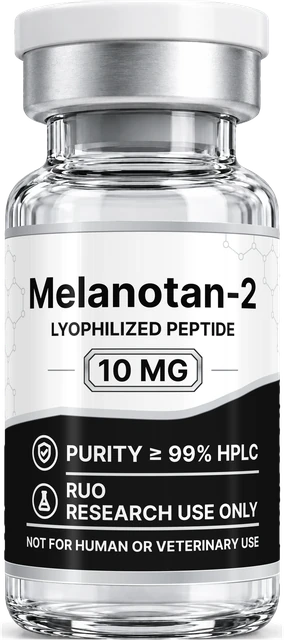
Also known as Melanotan II or MT-2, Melanotan-2 is a synthetic cyclic peptide studied in the context of melanocortin receptor research. Research on Melanotan-2 is primarily concerned with biology of pigmentation, melanogenesis, signaling via melanocortins, appetite regulation, energy homeostasis and behavioral responses mediated by melanocortin receptors.
The Melanotan-2 10mg research grade consists of a certain amount of lyophilized peptide material, which is used for scientific investigations. As the interest in research peptides among researchers in Australia grows, the evaluation of Melanotan-2 often revolves around peptide identity, purity, batch tracking, documentation and proper storage.
The Therapeutic Goods Administration (TGA) does not approve the use of Melanotan-2 for skin tanning in Australia and warns Australians about the risks associated with the usage of products containing Melanotan-1 or Melanotan-2 for tanning purposes.
What Is Melanotan-2?
Melanotan-2 is a man-made analogue of alpha-melanocyte stimulating hormone, also known as α-MSH. This peptide analog is a cyclic form of the molecule that interacts with multiple types of receptors found in the melanocortin receptor system.
While there are receptor selective analogues of melanocortin peptides, MT-2 is often defined as a non-selective melanocortin receptor agonist. Laboratory studies have focused on its activity in the various receptor pathways involved with skin pigmentation, central nervous system signaling, feeding behavior, and energy homeostasis. The melanocortin system has five identified receptors – MC1R to MC5R.
A key characteristic of the cyclic peptide of Melanotan-2 is significant for laboratory research purposes. The cyclic peptide structure has certain characteristics that make it unique compared to the natural linear forms of the peptides.
Search phrases linked with this substance include Melanotan-2 peptide, Melanotan II, MT-2 peptide, Melanotan-2 10mg, melanocortin receptor agonist and pigmentation research peptide.
Why Is Melanotan-2 Being Studied?
MT-2 has been investigated due to involvement of the melanocortin receptors in many biological functions. Unlike most other studies focused on just one field, MT-2 was used as an investigative tool to explore the functioning of the receptor-mediated signaling in both peripheral and central models.
One such field is the study of melanogenesis. The activation of melanocortin signaling in melanocytes is related to melanin production and pigmentation biology. MC1R is especially involved in pigmentation signaling and belongs to peripheral tissues such as skin.
Some other experimental fields include:
- melanocortin receptor signaling and receptor activation;
- melanocyte biology and melanin synthesis pathways;
- MC1R pigmentation models;
- MC3R and MC4R signaling studies;
- appetite and feeding-behavior models;
- energy homeostasis and metabolic signaling;
- central nervous system pathways study;
- behavioral and neuroendocrine studies.
Results of animal and experimental models cannot be considered as clinical benefits in advance. Melanotan-2 is still a compound which needs separation of experimental results and therapeutic application.
How Does Melanotan-2 Work?
Melanotan-2 is used experimentally by way of interaction with the melanocortin receptors. The melanocortin receptors are G protein-coupled receptors which participate in many signaling pathways.
The action of MC1R stimulation has been linked with signaling mechanisms responsible for melanogenesis and melanin formation. Melanotan-2 is reported to act experimentally on the melanocytes by way of MC1R stimulation.
MT-2 also interacts with the central melanocortin signaling pathway. Studies have been performed using MC3R and MC4R and their relationship with eating behavior and energy expenditure. Studies performed on experimental animals have revealed some effect on food intake and metabolism, although no evidence of its approved use and outcome has been established.
Since Melanotan-2 affects various types of melanocortin receptors, there are certain factors to be taken into account while analyzing the experiments.
Understanding Melanotan-2 Dosage
Dosage of Melanotan-2 may mean two completely different things: one is the amount delivered in a vial intended for research purposes, while another is the concentration/exposure used in an experiment.
Melanotan-2 10mg vial will contain an actual total amount of 10mg peptides in it. One must not confuse this with dosage that is to be taken by a person.
In any real lab setting, the concentration used during experiments will depend on many factors such as:
- goal of the experiment;
- model used (in vitro or in vivo);
- pathway studied;
- type of assay;
- volume of sample;
- duration of exposure;
- publications on methodology; and
- lab protocol.
One must consider all these factors while designing their experiments.
Melanotan-2 and Research Quality
Research quality becomes critical when dealing with peptides since experimental reproducibility depends on the quality of material used and its documentation.
Purity in percentages is not enough for proper evaluation of the research peptide. Scientists studying Melanotan-2 10mg have to take into account peptide identity, method of analysis, batch number, amount of material, and its documentation and storage.
High performance liquid chromatography (HPLC) can be used to check the chromatographic purity. Mass spectrometry could help scientists identify molecules based on analytical data and molecular mass.
The main aspects of quality become batch documentation, product specifications, lot identification and storage. All these things will allow the researcher to determine whether the material can be used in an experiment.
Melanotan-2 in Australia
The number of searches conducted on Melanotan-2 Australia is increasing in tandem with the increase in interest regarding peptides generally. But the regulatory framework for this product in particular is of special significance.
According to TGA, Melanotan is not registered in Australia as a tanning product and has cautioned that tanning products available through online marketing might not have been assessed for safety, quality or efficacy. The TGA in May 2026 further issued a more comprehensive caution regarding the dangers of using unregistered peptide products available online.
It is critical to differentiate between the use of peptide material as part of laboratory research and its availability online as a product marketed for personal cosmetic or therapeutic application in an Australian research environment.
What to Consider Before You Buy Melanotan-2
Prior to obtaining Melanotan-2 for research purposes, it is advisable to pay more attention to substance quality and supplier information than to marketing claims.
Is the Melanotan-2 10 mg substance specification detailed, does it have the corresponding lot or batch number, is there the possibility to get hold of its analysis report? Is the Certificate of Analysis of the supplied substance batch specific, not just general?
Researchers will also need to make sure that packaging, shipping, and storage conditions meet standards and that health/cosmetic marketing claims are separated from the information on experiments.
Australian labs will additionally need to assess their responsibilities prior to sourcing Melanotan-2.
Safety and Current Research
Melanotan-2 is still in the experimentation phase and must not be represented as an officially licensed tan. TGA issued warnings that the products containing melanotan might be linked to negative consequences and expressed their concern regarding unauthorized products purchased through the Internet.
Recent studies have been conducted on the biology of melanocortin receptors, which include such aspects as melanogenesis, central signaling, feeding behavior, and the general physiological activity of melanocortins. Nevertheless, results differ depending on the used models and can be evaluated taking into consideration the limitations of evidence available.
It is recommended to apply appropriate control in laboratories while investigating MT-2.