 AU
AU
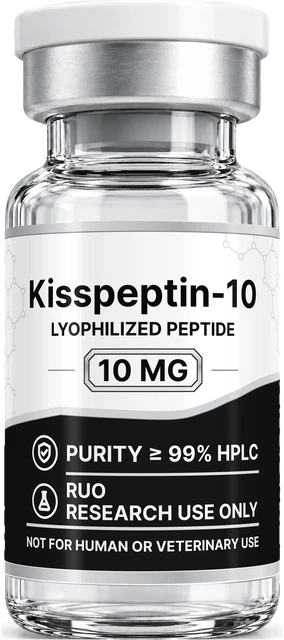
Kisspeptin-10 is an artificial peptide that is used in studies on reproductive endocrinology and hypothalamus signalling, including gonadotropin-releasing hormone studies. The field of peptide science has seen an interest in the Kisspeptin-10 molecule due to the involvement of Kisspeptin receptor signaling pathway, otherwise called KISS1R or GPR54 signaling.
This is a Kisspeptin-10 10mg research formula that should be used only in scientific experiments. The scientific use of Kisspeptin-10 includes research done in GnRH secretion, luteinising hormone signalling, follicle-stimulating hormone signaling and hypothalamus-pit
What Is Kisspeptin-10?
The Kisspeptin-10 peptide is a small fragment of the bioactive kisspeptin group of peptides synthesized from the gene KISS1. Kisspeptin-10 includes the active C-terminal segment involved in activation of the kisspeptin receptor.
Kisspeptin-10 in scientific literature is considered as an agonist of the KISS1R receptor. The KISS1R receptor is directly linked to the process of reproductive hormones regulation and the hypothalamus control of the endocrine system.
Kisspeptin-10 is not a reproductive hormone. It is considered to be a signaling peptide which can possibly affect the pathway of hormones in some way.
Why Is Kisspeptin-10 Being Studied?
Kisspeptin-10 is currently being investigated since kisspeptin pathway is involved in reproductive biology. Scientific interests include puberty signaling, reproduction, gonadotropins, sex steroid feedback, and hypothalamic-pituitary-gonadal axis modeling.
Areas of research include:
- KISS1R and GPR54 receptor agonist activation;
- GnRH neuronal activation;
- LH and FSH responses;
- Reproductive endocrinology studies;
- Fertility models;
- Puberty and developmental biology;
- Sex steroid feedback;
- Hypothalamic-pituitary-gonadal axis regulation.
Since Kisspeptin-10 is used to activate signaling at the top of the reproductive endocrine signaling cascade, it can be very useful in investigations where hypothalamic signals need to be examined.
How Does Kisspeptin-10 Work?
Kisspeptin-10 is investigated based on its potential affinity and activation of KISS1R, also referred to as GPR54. It is expressed in a number of endocrine-related tissues, being significant in hypothalamic signalling.
Upon Kisspeptin-10 activating the receptor in a model system, it is likely to activate the GnRH neurons. As a result, GnRH stimulates the pituitary gland that impacts the secretion of luteinizing and follicle-stimulating hormones.
This pathway is usually defined as a component of the hypothalamic-pituitary-gonadal axis. In simpler scientific terms, Kisspeptin-10 is investigated as an upstream peptide signal influencing reproductive hormone communication.
Scientists study the effects of feedback from sex steroids, energy balance, developmental age and reproductive state on this pathway. Such variables make Kisspeptin-10 relevant for endocrine experiments.
Understanding Kisspeptin-10 Dosage
The Kisspeptin-10 Dosage is often sought out by people on the internet, but it has to be defined precisely. When a Kisspeptin-10 10mg vial is mentioned, it means the content of the peptide substance in the vial itself. However, it is not a description of the dose that can be taken by a person.
Depending on the experimental model, goal, exposure method, kind of testing, time and species used, the concentration of the Kisspeptin-10 will differ. In cell, tissue and animal studies, the concentrations used may vary dramatically.
A researcher has to calculate the concentration needed based on the existing protocols and scientific literature. The 10mg amount represents the material only.
Kisspeptin-10 intended for research purposes should not be promoted or regarded as an official medication for fertility, hormone, bodybuilding or wellness treatments.
Kisspeptin-10 and Research Quality
The quality of research is crucial when dealing with peptide substances. There are certain quality considerations that researchers have to pay attention to if they conduct research on Kisspeptin-10 peptides.
It is recommended that researchers study the available analytical documentation prior to using the substance. Some quality parameters could include:
- batch or lot number;
- confirmation of peptide identity;
- purity details;
- HPLC analysis;
- mass spectrometry results;
- Certificate of Analysis;
- storage guidelines;
- statement for research use.
HPLC is frequently used for assessing peptide purity, while mass spectrometry is sometimes used to confirm the molecular identity. The Certificate of Analysis needs to refer clearly to the batch of substance delivered.
Proper storage is also very significant since peptides may be quite sensitive to moisture, light and temperature.
Kisspeptin-10 in Australia
There is an increasing interest in Kisspeptin-10 Australia, Kisspeptin-10 Peptide Australia and research peptides Australia in the scientific community.
Researches in Australia should be able to make a distinction between research compounds and medicine. Just because a compound is available for research purposes does not mean that it can be used for performance, fertility or medical reasons.
Prior to purchasing Kisspeptin-10 in Australia, the researchers should take into account regulatory issues, their needs, and documentation requirements.
The proper product page for the Australian market should be using research only terminology and specifications.
What to Consider Before You Buy Kisspeptin-10
When looking for Kisspeptin-10 10mg, Kisspeptin-10 peptide, or buy Kisspeptin-10 Australia, scientists need to look beyond cost or availability alone.
These factors include compound identity, product purity verification, batch tracking capabilities, access to Certificate of Analysis, storage information, and supplier transparency. The credible supplier would disclose the chemical name, concentration, usage and other relevant documentation.
Scientists should also stay away from any product that is marketed by making false claims about fertility, hormone optimization, anti-aging, performance or bodybuilding. Kisspeptin-10 is strictly a research peptide and needs to be talked about scientifically.
Safety and Current Research
Kisspeptin-10 is an investigational peptide. It cannot be taken to be safe, approved or suitable for use in humans except within the confines of proper investigation or clinical research.
Various studies have been conducted on kisspeptin pathways in hormone regulation. Scientific discoveries are always based on the nature of the study, dose, administration method, the study population and experimental model involved. These results cannot be translated into health claims for consumers.
The potential biological functions might include hormonal signaling, reproductive endocrine pathways and subsequent gonadotropin action. Given that these pathways could be complicated, using them without supervision poses potential danger.
It is important to evaluate current research within the context of peer reviewed research, regulatory environment and study design. Kisspeptin-10 10mg must be promoted as a research substance and not a medicinal one.