 AU
AU
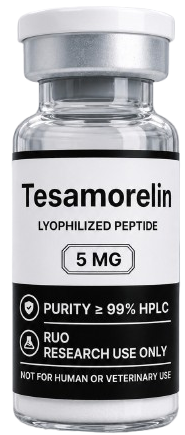
Tesamorelin peptide is an analog of the naturally occurring growth hormone-releasing hormone (GHRH), which has received considerable attention from scientists in research into metabolism, endocrinology, and body composition. Contrary to those compounds that supply growth hormone directly, Tesamorelin is researched in terms of how it interacts with the body’s natural growth hormone signaling pathway.
Scientists conduct research on Tesamorelin with regard to growth hormone release, IGF-1, visceral adipose tissue, lipids metabolism, and other factors related to endocrine physiology. Most of the already conducted clinical research is related to excessive abdominal fat caused by HIV-related lipodystrophy, while other researches are devoted to metabolic indicators and fat content in the liver.
In case if you are an Australian scientist and want to know more about Tesamorelin peptide, then you should be aware of all these aspects.
What Is Tesamorelin?
Tesamorelin is an artificial growth hormone-releasing factor analogue that consists of the 44-amino acid sequence of human growth hormone-releasing hormone and incorporates a structural change intended to enhance the stability of GHRH relative to its natural form.
Its mode of action involves the growth hormone-releasing hormone receptors of the pituitary gland which are stimulated to promote the endogenous secretion of growth hormone. The activity could have a further impact on IGF-1 signalling and other metabolic mechanisms.
Tesamorelin is distinct from recombinant human growth hormone. Instead of providing the growth hormone itself, it works via stimulating the physiological growth hormone axis through receptor signaling.
In scientific studies, Tesamorelin is known for:
- Secretion and pulsatility of growth hormone
- GHRH receptor activity
- IGF-1 signalling pathways
- Visceral adipose tissue metabolism
- Lipolysis and lipid metabolism
- Body composition
- Glucose homeostasis
- Liver fat and metabolic health
Tesamorelin has been found to result in decreased visceral adipose tissue in some clinical studies focused on particular groups, notably people with HIV-induced lipodystrophy. However, tesamorelin cannot be considered as a weight loss peptide for use in all cases.
Why Is Tesamorelin Being Studied?
Tesamorelin investigation is mostly motivated by curiosity about the connections between the hypothalamic-pituitary axis and growth hormone secretion and metabolism.
The physiological significance of growth hormone includes its role in lipid metabolism, body composition, and tissue regulation. Thus, scientists investigate GHRH analogs and explore how activation of endogenous growth hormone secretion affects specific metabolic processes.
One field of research involving Tesamorelin is visceral adipose tissue, which can also be called VAT. The visceral fat is situated inside the abdominal cavity around organs and differs biologically from the subcutaneous fat that is found beneath the skin layer.
Some randomized clinical trials have shown that there are statistically significant decreases in visceral adipose tissue in particular HIV-infected patients with fat deposition around the abdomen. Other trials have focused on changes in waist circumference, triglycerides, adiponectin, liver fat, and glucose parameters.
Further investigation of Tesamorelin is motivated by the complexity of the growth hormone-IGF-1 axis.
How Does Tesamorelin Work?
Tesamorelin acts as a GHRH receptor agonist. It binds to the growth hormone-releasing hormone receptors present on the cells of the anterior pituitary gland.
This leads to stimulation of the synthesis and secretion of endogenous growth hormone, which in turn results in the production of IGF-1 from the liver and peripheral tissues and alters the subsequent metabolic signalling.
The basic research pathway for this is:
GHRH receptor activation to pituitary growth hormone secretion to increased GH signalling to alterations in IGF-1 metabolism and pathways.
Growth hormone has lipolytic action and helps in the mobilisation of stored triglycerides. It is because of this that the Tesamorelin research has been focused heavily on visceral adiposity and body composition.
It should be understood that the pathway described above does not mean that it is a general mechanism for weight loss and Tesamorelin has certain specific applications.
Understanding Tesamorelin Dosage
Queries regarding “Tesamorelin dosage” are prevalent; however, dosage needs to be carefully interpreted.
Dosage information provided by a clinical study of a pharmaceutical drug cannot simply be generalized into laboratory versions of Tesamorelin, which may have varying formulations or not even be officially approved drugs at all. Guidelines for conducting the experiment need to take into account the purpose, ethics, and institutional regulations of the study.
Experimental research on Tesamorelin follows specific guidelines including the preparation used, the method of application, frequency, duration, participant criteria, and monitoring. Such factors are essential when interpreting research findings.
When researching Tesamorelin dosages, it is important to look at the overall method of the study and not just one measurement. Variables like formulation, concentration, stability, reconstitution and analysis are essential in conducting experiments.
Tesamorelin and Research Quality
Product quality is one of the most important factors to take into account when assessing the suitability of Tesamorelin peptide for research.
A percent purity guarantee cannot serve as a comprehensive evaluation of product quality. The scientist needs to look at peptide identification, purity analysis method, batch traceability, storage conditions, packaging and associated documentation.
Analytical techniques commonly used in peptide quality assessment are HPLC purity profiling and mass spectrometry peptide identity verification.
The key quality factors are:
- Batch-specific Certificate of Analysis documentation
- Specification of peptide identity
- HPLC purity results
- Mass spectrometry peptide identity test results
- Batch/lot traceability
- Lyophilized format
- Storage conditions
- Packaging
- Labeling
The researcher’s need to know that the product and the documentation can be linked to a certain batch through the information provided by the reliable research supply chain.
Tesamorelin in Australia
Searches on Tesamorelin Australia have increased in number as part of the general interest in research peptides and metabolic studies involving peptides.
Nevertheless, it is important to take into account the regulatory situation in Australia. TGA has just intensified its compliance efforts for unregistered peptide medications and has noted that many of the peptide medications used in Australia might not appear in the Australian Register of Therapeutic Goods (ARTG).
Australian consumers must be able to draw the line between laboratory research products and therapeutic goods which can be used by humans. Any product labeled as for laboratory research should not be sold as a registered medication or even recommended for self-medication.
Those who want to make use of Tesamorelin should look up ARTG or consult a qualified medical expert.
What to Consider Before You Buy Tesamorelin
In the case of Tesamorelin Australia, or when looking for suppliers of Tesamorelin peptides, product quality and traceability should come first, followed by marketing promises.
See if the supplier offers specifications and batch information along with analysis. Also, see if the certificate of analysis is batch-specific or just a generic document.
The storage and shipment method is another crucial aspect since peptides are delicate compounds. Being exposed to improper temperatures, humidity levels or fluctuations in temperature can impact stability.
Watch out for sellers who promise to deliver some results, such as fat reduction, muscle growth or anti-ageing effects. The evidence-based results associated with Tesamorelin cannot be applied generally.
Australian users need to check regulatory status and purpose before purchasing any peptide compound.
Safety and Current Research
Tesamorelin works on the pathways involving the growth hormone and IGF-1, making safety monitoring critical in studies on Tesamorelin.
Potential risks, as stated in prescribing information or other medical sources, include elevation of IGF-1 levels, glucose intolerance/diabetes, fluid retention, joint pain, skin reactions and hypersensitivity reactions. Contraindications and warnings are also applicable depending on specific clinical situations.
At present, research is still underway regarding Tesamorelin in the metabolic and body composition field. There have been studies showing decreases in visceral fat deposits among certain groups of HIV-infected individuals, whereas preliminary research has also involved liver fat and metabolism.
Findings should be viewed based on the target study population and research method used. Evidence from a certain clinical population does not mean effectiveness of Tesamorelin in general obesity, body building, athletics and anti-aging.